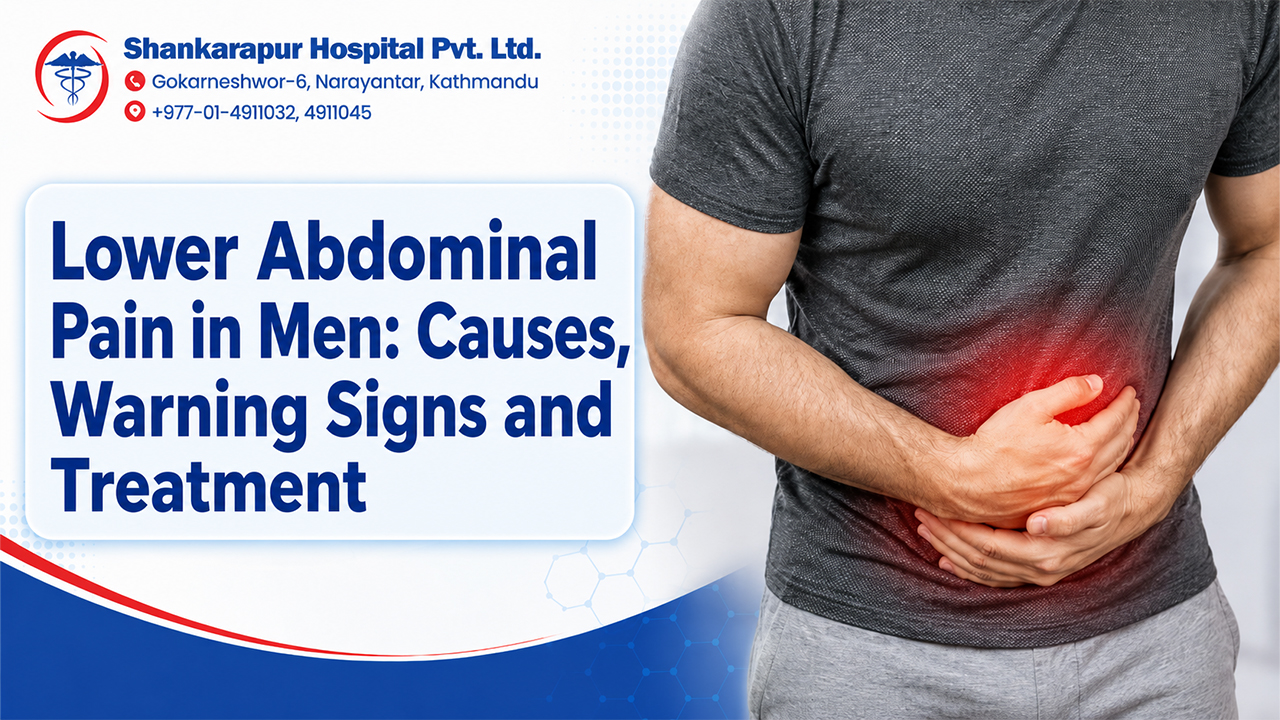
Lower Abdominal Pain in Men can come from the urinary system, digestive system, reproductive organs, muscles, or nearby nerves. Some causes are mild, such as gas, constipation, or muscle strain. Others need medical care, including kidney stones, urinary infection, prostatitis, appendicitis, hernia, bowel inflammation, or testicular conditions.
The lower abdomen includes the area below the belly button and above the groin. In men, pain in this area may also spread to the back, pelvis, testicles, penis, or thighs.
The right response depends on the pain pattern, location, severity, duration, and associated symptoms such as fever, vomiting, blood in urine, burning urination, swelling, or inability to pass urine or stool.
This guide explains common causes, warning signs, diagnosis, and abdominal pain treatment options from a patient-first medical perspective.
What Is Lower Abdominal Pain in Men?
Lower abdominal pain means discomfort, cramping, pressure, sharp pain, burning, or heaviness felt in the lower part of the belly.
In men, this area is close to the bladder, prostate, ureters, bowel, appendix, pelvic muscles, blood vessels, and groin structures. Because many organs are located close together, the pain source is not always obvious without examination.
For example, a kidney stone may cause pain that starts in the side or back and moves toward the lower abdomen or groin. A urinary infection may cause lower belly pain with burning urination. Prostate inflammation may cause pelvic pain, urinary difficulty, and pain around the groin.
Medical evaluation is important when pain is severe, sudden, repeated, or linked with urinary, bowel, fever, or testicular symptoms.
Quick Symptom Guide: What Could Lower Belly Pain Mean?
|
Pain Pattern |
Possible Cause |
Common Associated Symptoms |
|
Cramping with bloating |
Gas, constipation, indigestion |
Fullness, bowel changes |
|
Burning pain with urination |
UTI or bladder infection |
Frequent urination, cloudy urine |
|
Pain moving from side to groin |
Kidney stone |
Nausea, blood in urine, restlessness |
|
Pain in lower right abdomen |
Appendicitis or bowel issue |
Fever, nausea, worsening pain |
|
Pelvic pain with urinary difficulty |
Prostatitis |
Painful urination, groin discomfort |
|
Bulge or heaviness in groin |
Hernia |
Pain when coughing or lifting |
|
Pain with diarrhea |
Infection, IBS, bowel inflammation |
Loose stool, cramps |
|
Sudden testicular pain with lower belly pain |
Testicular torsion or infection |
Testicular swelling, nausea |
This table is only a guide. Similar symptoms can occur in different conditions.
Common Causes of Lower Abdominal Pain in Men
1. Urinary Tract Infection
A urinary tract infection can affect the bladder, urethra, or kidneys. In men, UTI symptoms may include lower abdominal discomfort, burning urination, frequent urge to urinate, cloudy or strong-smelling urine, and sometimes blood in urine.
The National Institute of Diabetes and Digestive and Kidney Diseases notes that bladder infection symptoms can include pain or discomfort in the lower abdomen, burning during urination, frequent urination, and cloudy, bloody, or strong-smelling urine.
Men with recurrent UTI symptoms should not ignore them because underlying causes such as prostate enlargement, stones, urinary blockage, or incomplete bladder emptying may need evaluation.
2. Kidney Stones
Kidney stones can cause intense pain when a stone moves into the ureter, the tube that carries urine from the kidney to the bladder. Pain may begin in the back or side and travel to the lower abdomen, groin, or testicle.
Kidney stone pain often comes in waves. It may be associated with nausea, vomiting, urinary urgency, burning urination, or blood in urine.
About 1 in 10 people will have a kidney stone at some point, and men are slightly more likely than women to experience kidney stones.
A urology hospital in Kathmandu or a kidney-focused hospital service may use urine tests, blood tests, ultrasound, X-ray, or CT scan depending on the case.
3. Prostatitis
Prostatitis means inflammation of the prostate gland. It can cause pain in the lower abdomen, pelvis, groin, genitals, or lower back. It may also cause painful urination, difficulty urinating, frequent urination, fever, or discomfort during ejaculation.
Prostatitis can be bacterial or non-bacterial. Treatment depends on the type, severity, and test findings.
4. Appendicitis
Appendicitis usually causes pain that may start near the belly button and then move to the lower right abdomen. It can worsen with movement, coughing, or pressure.
Other symptoms may include nausea, vomiting, fever, loss of appetite, or abdominal tenderness.
Appendicitis can become serious if the appendix bursts. Sudden or worsening lower right abdominal pain should be medically assessed.
5. Constipation and Gas
Constipation is one of the common non-emergency causes of lower abdominal discomfort. It can cause cramping, bloating, pressure, and a feeling of incomplete bowel emptying.
Pain from constipation may improve after passing stool or gas. However, persistent constipation with weight loss, blood in stool, vomiting, severe pain, or inability to pass stool needs medical attention.
6. Irritable Bowel Syndrome
Irritable bowel syndrome, or IBS, can cause lower abdominal pain with diarrhea, constipation, bloating, or changes in stool pattern.
IBS pain often comes and goes. It may be linked with stress, certain foods, irregular meals, or gut sensitivity. Diagnosis usually requires checking symptoms and ruling out other conditions when warning signs are present.
7. Hernia
A hernia happens when tissue pushes through a weak area in the abdominal wall. In men, inguinal hernia is common around the groin.
Symptoms may include a groin bulge, dragging sensation, lower abdominal pain, or pain during lifting, coughing, or standing for long periods.
A painful, firm hernia that cannot be pushed back, especially with vomiting or abdominal swelling, can be an emergency.
8. Muscle Strain
Exercise, heavy lifting, sudden twisting, sports injury, or coughing can strain abdominal or groin muscles.
Muscle-related pain often worsens with movement and improves with rest. It usually does not cause fever, urinary symptoms, vomiting, or blood in stool or urine.
9. Testicular Conditions
Pain from the testicle may be felt in the lower abdomen or groin. Causes include infection, inflammation, injury, or testicular torsion.
Testicular torsion is urgent because blood flow to the testicle can be affected. Sudden severe testicular pain, swelling, nausea, or lower abdominal pain should be treated as an emergency.
10. Bowel Infection or Inflammation
Food-related infection, gastroenteritis, inflammatory bowel disease, diverticular disease, or other bowel problems can cause lower abdominal pain.
Symptoms may include diarrhea, fever, vomiting, mucus in stool, blood in stool, or dehydration.
Abdominal pain has many causes, and while some are mild, others may require urgent care. Mayo Clinic notes that location, pain pattern, and duration can help guide diagnosis.
Lower Abdominal Pain by Location
Pain in the Lower Right Abdomen
Lower right pain may be linked with appendicitis, bowel inflammation, constipation, hernia, kidney stone, urinary infection, or muscle strain.
Worsening pain with fever, nausea, vomiting, or tenderness should be checked promptly.
Pain in the Lower Left Abdomen
Lower left pain may occur with constipation, gas, diverticular disease, bowel infection, urinary problems, kidney stone, or muscle strain.
Pain with blood in stool, fever, repeated vomiting, or swelling requires medical evaluation.
Pain in the Center Lower Abdomen
Central lower abdominal pain often points toward the bladder, prostate, pelvic muscles, or bowel.
Burning urination, frequent urination, difficulty passing urine, or blood in urine suggests a urinary or prostate-related cause.
Pain That Moves to the Groin or Testicle
Pain moving from the back or side into the groin can occur with kidney stones. Pain centered in the testicle with nausea or swelling can suggest a testicular emergency.
When Should Men Worry About Lower Abdominal Pain?
Not all lower abdominal pain is dangerous. Mild pain from gas, constipation, or muscle strain may improve with hydration, rest, light food, and normal bowel movement.
However, some symptoms need urgent care.
It is advised to seek urgent medical help for stomach pain that comes on suddenly or is severe, pain with abdominal tenderness, vomiting blood, black or bloody stool, inability to pass urine, inability to pass stool or gas, breathing trouble, chest pain, or collapse.
Warning Signs That Need Medical Attention
|
Warning Sign |
Why It Matters |
|
Sudden severe pain |
May suggest appendicitis, stone obstruction, bowel problem, or emergency condition |
|
Fever with abdominal pain |
May suggest infection or inflammation |
|
Blood in urine |
May occur with stone, infection, injury, or urinary tract disease |
|
Blood in stool or black stool |
May suggest digestive bleeding |
|
Repeated vomiting |
May cause dehydration or suggest obstruction/infection |
|
Inability to urinate |
Can indicate urinary blockage |
|
Swollen or hard abdomen |
May suggest serious abdominal condition |
|
Fainting or severe weakness |
Can signal shock, dehydration, or internal problem |
|
Sudden testicular pain |
Needs urgent assessment |
What Are the Three Red Flags in Abdominal Pain?
The three practical red flags are:
- Sudden, severe, or worsening abdominal pain
- Pain with fever, vomiting, blood in urine, or blood in stool
- Pain with inability to urinate, pass stool, pass gas, or with fainting/collapse
These are not the only warning signs, but they are easy for patients to remember.
How Is Lower Abdominal Pain Diagnosed?
Diagnosis starts with a doctor asking about the pain and related symptoms.
Important questions include:
- When did the pain start?
- Is it sharp, dull, cramping, burning, or pressure-like?
- Is it on the right, left, center, groin, or back?
- Does it move anywhere?
- Is there fever, vomiting, diarrhea, constipation, or urinary trouble?
- Is there blood in urine or stool?
- Is there testicular pain or swelling?
- Did the pain start after lifting, injury, food, or exercise?
- Is this the first episode or repeated?
Common Tests Used
|
Test |
Why It May Be Done |
|
Urine test |
Checks infection, blood, crystals, kidney stone signs |
|
Blood test |
Checks infection, kidney function, inflammation |
|
Ultrasound |
Evaluates kidneys, bladder, prostate, appendix area, or hernia |
|
X-ray |
May help assess stone or bowel pattern in selected cases |
|
CT scan |
Used when stone, appendicitis, obstruction, or serious cause is suspected |
|
Stool test |
Used when diarrhea, blood, or infection is suspected |
|
Uroflow or prostate evaluation |
Used when urinary symptoms suggest prostate or bladder outlet issues |
Shankarapur Hospital lists diagnostic and imaging services, OPD, inpatient services, emergency care, and urology-related care on its website resources, which are relevant for evaluating kidney stones and urinary causes of abdominal pain.
Abdominal Pain Treatment: What Options Are Used?
Abdominal pain treatment depends on the cause. Treating the wrong cause can delay recovery, so diagnosis matters.
Treatment by Cause
|
Cause |
Possible Treatment Approach |
|
Gas or constipation |
Fluids, fiber, movement, stool-softening plan when appropriate |
|
UTI |
Urine test and antibiotics when bacterial infection is confirmed |
|
Kidney stone |
Pain control, hydration guidance, medicines, procedure if stone is large or blocked |
|
Prostatitis |
Antibiotics for bacterial cases, pain control, urinary symptom management |
|
Appendicitis |
Urgent surgical evaluation |
|
Hernia |
Observation or surgery depending on severity and complications |
|
IBS |
Diet changes, stress management, bowel-directed treatment |
|
Muscle strain |
Rest, safe pain relief, activity modification |
|
Testicular torsion |
Emergency surgical care |
Do not take antibiotics without medical advice. Antibiotics only help bacterial infections and should be selected based on clinical evaluation.
How to Relieve Mild Lower Abdominal Pain at Home
Home care may help when pain is mild, short-term, and not linked with warning signs.
Helpful steps include:
- Drink enough water.
- Eat light meals.
- Avoid heavy, oily, or irritating foods for a short period.
- Rest and avoid heavy lifting.
- Use a warm compress for cramping or muscle discomfort.
- Walk gently if gas or constipation is likely.
- Track urine, stool, fever, and pain pattern.
Avoid strong painkillers or repeated self-medication when the cause is unclear. Some medicines can affect the stomach, kidneys, or bleeding risk.
Medical care is safer when pain is severe, repeated, or connected with urinary symptoms.
Why Urology Evaluation Matters in Men
Men with lower abdominal pain often need urology evaluation when symptoms suggest the urinary tract, prostate, kidney, bladder, or testicles.
Urology-related symptoms include:
- Burning urination
- Frequent urination
- Difficulty starting urine
- Weak urine stream
- Blood in urine
- Pain from back to groin
- Testicular pain
- Recurrent urinary infection
- Feeling that the bladder does not empty
A urology hospital in Kathmandu or kidney hospital in Nepal may help identify conditions such as kidney stones, UTI, prostate disease, urinary blockage, and bladder problems.
Shankarapur Hospital is located at Gokarneshor-06, Jorpati, Narayantaar, Kathmandu, and lists emergency contact details and healthcare services through its official website.
Lower Abdominal Pain and Kidney Health
Kidney and urinary causes are important in men because kidney stones, urinary obstruction, infection, and prostate-related urine flow problems can all cause lower abdominal or pelvic pain.
Kidney-related pain is not always felt only in the back. It can move to the lower belly, groin, or testicle, especially when a stone travels through the urinary tract.
Men should be more careful when lower abdominal pain appears with:
- Blood in urine
- Painful urination
- Fever or chills
- Nausea or vomiting
- Severe side pain
- Repeated kidney stone history
- Diabetes, kidney disease, or reduced urine output
Prompt evaluation can prevent complications such as infection, obstruction, or kidney function problems.
Lower Abdominal Pain in Men: Digestive vs Urology Causes
|
Feature |
More Suggestive of Digestive Cause |
More Suggestive of Urology Cause |
|
Pain with bowel movement |
Common |
Less common |
|
Diarrhea or constipation |
Common |
Usually absent |
|
Burning urination |
Uncommon |
Common |
|
Blood in urine |
Uncommon |
Important sign |
|
Pain moving to groin/testicle |
Possible but less typical |
Common with stones/testicular causes |
|
Fever |
Can occur |
Can occur |
|
Bloating |
Common |
Less common |
|
Weak urine stream |
Uncommon |
Common with prostate/bladder issues |
This comparison helps guide thinking, but diagnosis should be made by a clinician.
How to Prepare for a Doctor Visit
Before visiting the hospital, note:
- Exact pain location
- Pain score from 1 to 10
- Start time and duration
- Food, lifting, injury, or travel history
- Urinary symptoms
- Bowel changes
- Fever, vomiting, or weight loss
- Medicines already taken
- Past history of stone, hernia, UTI, prostate disease, or surgery
This information helps the doctor decide which tests are needed.
Prevention Tips for Recurrent Lower Abdominal Pain
Prevention depends on the cause, but these habits may reduce risk:
- Drink water regularly, especially in hot weather.
- Do not hold urine for long periods.
- Treat urinary symptoms early.
- Avoid unnecessary antibiotics.
- Eat enough fiber to reduce constipation.
- Exercise regularly but lift weights safely.
- Use proper technique for heavy lifting.
- Manage diabetes and blood pressure if present.
- Follow medical advice after kidney stone, UTI, or prostate diagnosis.
People with recurrent kidney stones may need stone analysis, urine testing, dietary advice, and follow-up.
Care at Shankarapur Hospital
Shankarapur Hospital serves patients from Kathmandu and nearby areas with OPD, emergency, diagnostic, imaging, inpatient, and specialty services listed on its official website.
For men with lower abdominal pain, hospital-based evaluation may include medical consultation, urology assessment, urine tests, blood tests, ultrasound, imaging, pain management, and referral for surgical care when needed.
This is especially useful when symptoms may involve kidney stones, urinary blockage, abdominal infection, hernia, appendicitis, or prostate-related conditions.
FAQs
How to relieve lower abdominal pain in men?
Mild lower abdominal pain may improve with rest, hydration, light food, gentle walking, warm compress, and avoiding heavy lifting. Seek medical care if pain is severe, repeated, worsening, or linked with fever, vomiting, urinary symptoms, blood in urine or stool, or testicular pain.
When should I worry about lower abdominal pain?
Worry when pain is sudden, severe, worsening, persistent, or associated with fever, vomiting, blood in urine, black or bloody stool, swollen abdomen, inability to urinate, inability to pass stool or gas, fainting, or testicular swelling.
What are the three red flags in abdominal pain?
The three red flags are sudden severe or worsening pain, pain with fever or bleeding, and pain with inability to urinate, pass stool, pass gas, or with fainting/collapse.
What is lower abdominal pain?
Lower abdominal pain is discomfort felt below the belly button and above the groin. In men, it may come from the bladder, prostate, kidneys, ureters, bowel, appendix, muscles, hernia, or testicles.
Conclusion
Lower abdominal pain in men can be simple or serious. Gas, constipation, and muscle strain are common mild causes, but urinary infection, kidney stone, prostatitis, appendicitis, hernia, bowel disease, and testicular emergencies also need consideration.
The safest approach is to look at the full pattern: pain location, severity, duration, urinary symptoms, bowel symptoms, fever, vomiting, and groin or testicular involvement.
Men should not ignore severe, repeated, or unexplained lower belly pain. Early diagnosis can reduce complications and guide the right abdominal pain treatment.
This article is for general health education only and does not replace consultation with a qualified doctor.
Author: Shankarapur Hospital Medical Content Team
Shankarapur Hospital provides patient-focused healthcare services in Kathmandu, including OPD, emergency care, diagnostic services, imaging, inpatient care, and specialist consultations. This content is prepared for health education using evidence-based medical references and should be reviewed by a qualified clinician before publication.