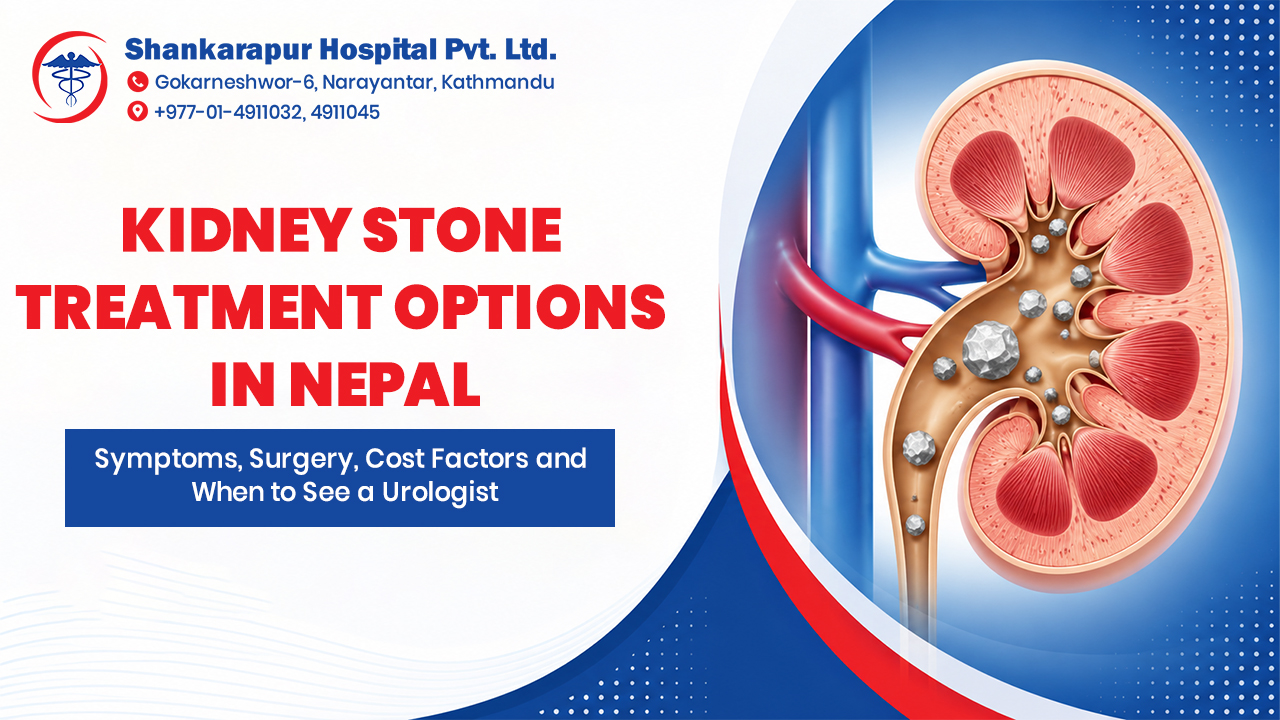
Kidney Stone Treatment depends on the stone’s size, location, symptoms, infection risk, kidney function and overall health condition. Some small stones pass naturally with medicines, fluids and monitoring, while larger or blocked stones may need procedures such as shock wave lithotripsy, ureteroscopy, laser stone removal or percutaneous nephrolithotomy.
Kidney stones can cause severe pain, blood in urine, burning urination, nausea, vomiting or fever. However, not every stone needs surgery. The right treatment begins with proper diagnosis by a urologist.
For patients in Kathmandu and nearby areas, Shankarapur Hospital provides urology consultation, diagnostic support, imaging services, OPD care, inpatient care and emergency care for patients with urinary and kidney related symptoms.
What Are Kidney Stones?
Kidney stones are hard deposits made from minerals and salts that form inside the kidney or urinary tract. They may be as small as a grain of sand or large enough to block urine flow.
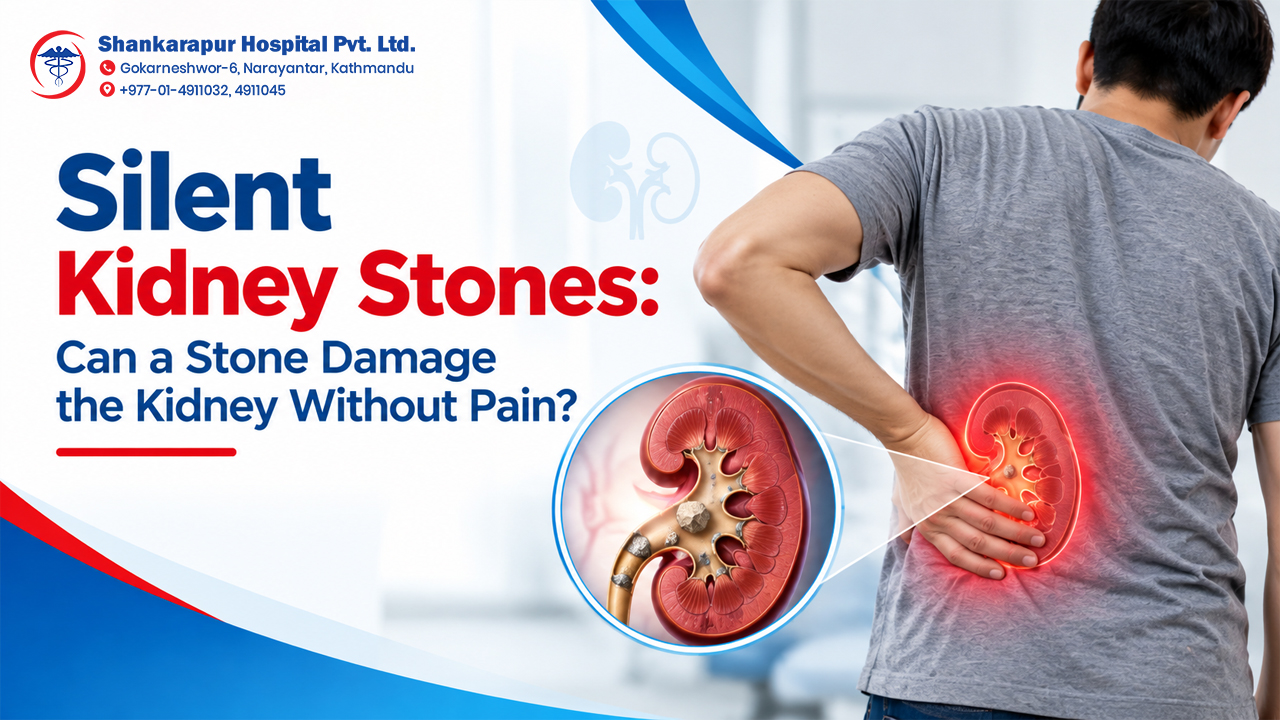
A stone may remain inside the kidney without symptoms. Pain usually starts when the stone moves into the ureter, the tube that carries urine from the kidney to the bladder.
Common medical terms for kidney stones include:
|
Term |
Meaning |
|
Kidney stone |
A stone formed in the kidney |
|
Renal calculi |
Medical term for kidney stones |
|
Nephrolithiasis |
Stone disease inside the kidney |
|
Ureteric stone |
Stone stuck in the ureter |
|
Urolithiasis |
Stone anywhere in the urinary tract |
Kidney stone disease is a common urology problem. It can affect adults of different age groups and may return again if the underlying cause is not managed.
Why Kidney Stone Treatment Should Be Personalized
There is no single best treatment for every kidney stone. A small stone in the lower ureter may pass with medicine and observation. A large kidney stone, infected stone or stone causing obstruction may need urgent intervention.
A urologist usually considers:
- Stone size
- Stone location
- Number of stones
- Pain severity
- Fever or infection
- Urine blockage
- Kidney swelling
- Kidney function test results
- Previous history of stones
- Pregnancy or other health conditions
- Patient preference and affordability
This is why two patients with kidney stones may receive completely different treatment plans.
Common Symptoms of Kidney Stones
Kidney stone symptoms can appear suddenly and may come in waves. The pain can be severe because the ureter tries to push the stone downward.
7 warning signs of kidney stones
|
Warning Sign |
What It May Mean |
|
Severe pain in back, side or lower abdomen |
Stone movement or blockage |
|
Pain spreading to groin |
Stone moving down the ureter |
|
Blood in urine |
Irritation or injury in urinary tract |
|
Burning urination |
Stone near bladder or associated infection |
|
Frequent urge to urinate |
Stone irritating urinary passage |
|
Nausea or vomiting |
Severe renal colic pain |
|
Fever or chills |
Possible infection; needs urgent care |
Seek urgent medical care if kidney stone symptoms come with fever, chills, continuous vomiting, inability to pass urine, severe uncontrolled pain or known kidney disease.
How Kidney Stones Are Diagnosed
Proper diagnosis is important before deciding treatment. Pain alone cannot confirm the size, location or seriousness of the stone.
A urologist may recommend:
1. Medical history and physical examination
The doctor asks about pain patterns, previous stones, diet, water intake, urinary symptoms, medicines and family history.
2. Urine test
A urine test can detect blood, pus cells, infection, crystals and urine pH. This helps identify infection risk and possible stone type.
3. Blood test
Kidney function tests, calcium level, uric acid level and infection markers may be checked when needed.
4. Ultrasound
Ultrasound is commonly used to detect kidney stones, kidney swelling and urinary obstruction. It is widely available and does not involve radiation.
5. CT scan
A CT scan may be advised when the diagnosis is unclear, pain is severe, or exact stone size and location are needed for surgery planning.
6. Stone analysis
If the stone passes naturally or is removed during surgery, lab analysis can identify its type. This helps prevent future stones.
Kidney Stone Treatment Options
Treatment depends on whether the stone is small, large, stuck, infected or causing kidney obstruction.
1. Observation and pain management
Small stones may pass naturally, especially when they are less than 5 mm and not causing serious blockage or infection.
The doctor may advise:
- Pain relief medicines
- Anti-nausea medicines
- Drinking adequate water
- Urine straining to catch the stone
- Follow-up imaging
- Monitoring for fever or worsening pain
This approach is not suitable for everyone. If pain is severe, the stone is large, or kidney function is affected, active treatment may be needed.
2. Medical Expulsive Therapy
Medical expulsive therapy uses medicines to relax the ureter and help the stone pass more easily. It is often used for selected ureteric stones.
This option may be considered when:
- The stone is small or medium-sized
- There is no serious infection
- Pain is controlled
- Kidney function is stable
- The patient can return for follow-up
Patients should not self-medicate. The decision should be made by a urologist after evaluating the stone.
3. Dissolving selected stones with medicine
Many people ask whether kidney stones can be dissolved quickly. The answer depends on the stone type.
Most calcium stones do not dissolve with water or home remedies. However, some uric acid stones may be dissolved gradually with medicines that make urine less acidic.
This treatment requires:
- Correct diagnosis
- Urine pH monitoring
- Regular follow-up
- Blood and urine testing
- Doctor-supervised medication
This is not an emergency solution for severe pain or obstruction.
4. Shock Wave Lithotripsy
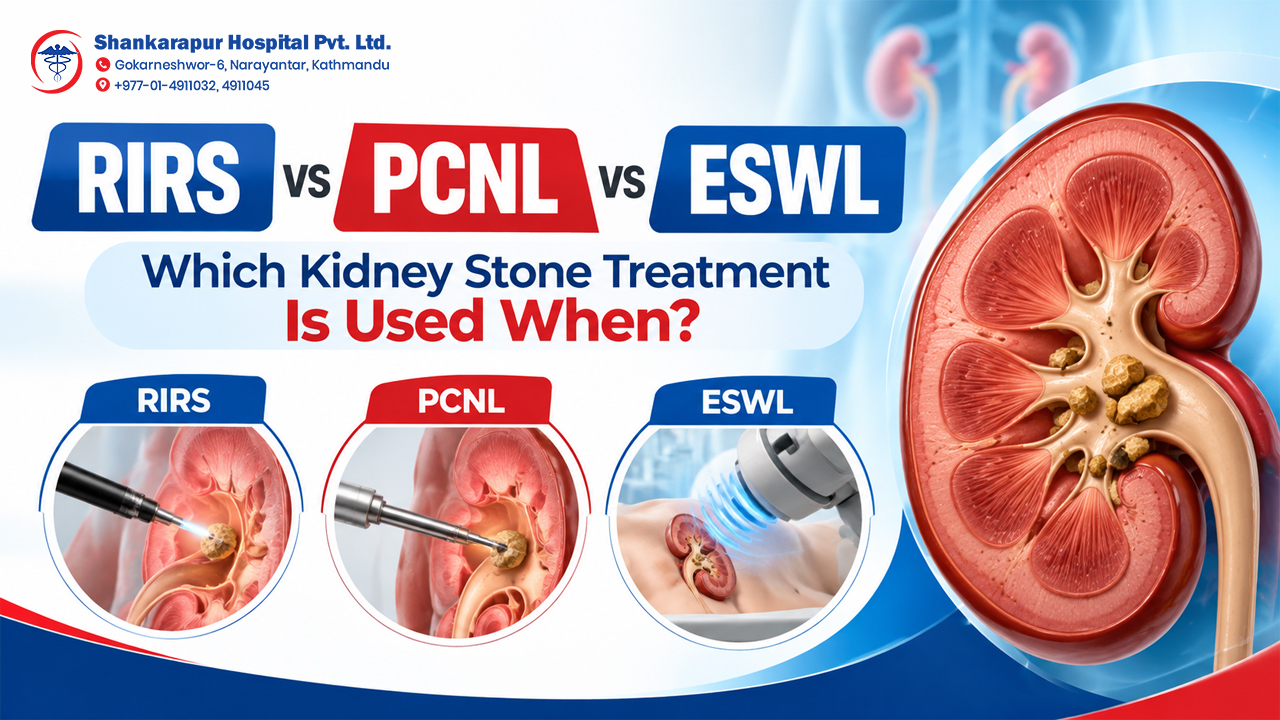
Shock Wave Lithotripsy, also called ESWL or SWL, uses focused shock waves to break a stone into smaller fragments. These fragments may then pass through urine.
It may be suitable for some small to medium kidney stones depending on location, stone hardness and body structure.
Advantages:
- Non-invasive
- No major incision
- Often done as an outpatient procedure
- Short recovery time
Limitations:
- May require more than one session
- Not ideal for all stone types
- Fragments may still cause pain while passing
- Follow-up imaging may be needed
5. Ureteroscopy and laser stone removal
Ureteroscopy is a common kidney stone surgery option, especially for stones in the ureter. A thin scope is passed through the urinary passage into the bladder and ureter. The stone may be removed or broken with laser energy.
It may be recommended for:
- Ureteric stones
- Stones not passing naturally
- Stones causing repeated pain
- Stones unsuitable for shock wave treatment
- Selected kidney stones
A temporary stent may be placed after the procedure to help urine flow and reduce blockage. Some patients may feel mild discomfort, frequent urination or burning until the stent is removed.
6. Retrograde Intrarenal Surgery
Retrograde Intrarenal Surgery, commonly called RIRS, is a flexible endoscopic procedure used for selected kidney stones. The surgeon passes a flexible scope through the natural urinary passage to reach the kidney and uses laser energy to break the stone.
RIRS may be suitable for selected stones inside the kidney when shock wave treatment is not ideal or when a minimally invasive internal approach is preferred.
The final decision depends on stone size, location, anatomy and surgeon evaluation.
7. Percutaneous Nephrolithotomy
Percutaneous Nephrolithotomy, or PCNL, is usually used for large kidney stones, complex stones or staghorn stones. In this procedure, the surgeon makes a small incision in the back to reach the kidney and remove or break the stone.
PCNL may be recommended when:
- Stone size is large
- Stone is complex or branching
- Other methods are unlikely to clear it
- There is a heavy stone burden
- Repeated procedures need to be avoided when possible
PCNL is more invasive than ureteroscopy or shock wave treatment, but it can be very useful for large stones.
Kidney Stone Treatment Comparison Table
|
Treatment Option |
Usually Used For |
Procedure Type |
Recovery |
Key Point |
|
Observation |
Small stones |
Non-surgical |
Varies |
Needs follow-up |
|
Medicines |
Selected ureter stones |
Non-surgical |
Varies |
Helps stone passage |
|
Uric acid dissolution |
Uric acid stones |
Medical |
Gradual |
Not for all stones |
|
ESWL/SWL |
Selected small-medium stones |
Non-invasive |
Short |
May need repeat session |
|
Ureteroscopy |
Ureter stones |
Endoscopic |
Short to moderate |
May need stent |
|
RIRS |
Selected kidney stones |
Flexible endoscopic |
Moderate |
No external incision |
|
PCNL |
Large or complex stones |
Minimally invasive surgery |
Longer |
Used for bigger stones |
When Is Kidney Stone Surgery Needed?
Kidney stone surgery may be needed when the stone is unlikely to pass naturally or is causing complications.
A urologist may advise surgery if:
- The stone is large
- Pain is severe or recurrent
- The stone blocks urine flow
- There is kidney swelling
- There is fever or infection
- Kidney function is affected
- The stone keeps growing
- The patient has repeated stone attacks
- The stone is in a difficult location
- Medicines and observation have failed
Kidney stone surgery does not always mean open surgery. Most modern procedures are minimally invasive and use scopes, laser energy or shock waves.
Kidney Stone Surgery Cost in Nepal: What Affects the Price?
Kidney stone surgery cost in Nepal can vary from patient to patient. A responsible hospital or urology team should provide an estimate after diagnosis, not before understanding the case.
The cost may depend on:
|
Cost Factor |
Why It Matters |
|
Stone size |
Larger stones may need advanced procedures |
|
Stone location |
Kidney, ureter and bladder stones are treated differently |
|
Type of procedure |
ESWL, URS, RIRS and PCNL have different costs |
|
Imaging tests |
Ultrasound, X-ray or CT scan may be needed |
|
Lab tests |
Urine, blood and kidney function tests may be required |
|
Anesthesia |
Some procedures need spinal or general anesthesia |
|
Hospital stay |
Day-care treatment costs less than admission |
|
Stent use |
A DJ stent may add procedure and removal cost |
|
Medicines |
Pain relief, antibiotics and other medicines vary |
|
Emergency care |
Emergency treatment may involve extra services |
The most accurate way to understand kidney stone surgery cost is to consult a urologist with imaging reports. This avoids unnecessary assumptions and helps patients choose the safest option.
Choosing a Urology Hospital in Nepal for Kidney Stone Care
When choosing a urology hospital in Nepal or a kidney hospital in Nepal for stone related symptoms, patients should look beyond only the cost. The quality of diagnosis, availability of imaging, emergency support and specialist consultation matter.
A practical checklist includes:
- Availability of urology consultation
- Ultrasound and diagnostic services
- Kidney function testing
- Emergency care for severe pain
- Inpatient support if admission is needed
- Clear explanation of treatment options
- Transparent cost estimate after evaluation
- Follow-up plan after treatment
- Prevention guidance to reduce recurrence
Shankarapur Hospital in Kathmandu provides urology consultation support along with diagnostic, OPD, inpatient and emergency services for patients with urinary and kidney-related concerns.
Can Kidney Stones Be Prevented?
Many kidney stones can return if the cause is not addressed. Prevention depends on stone type, diet, hydration, urine findings and medical history.
General prevention tips include:
1. Drink enough water
Dehydration concentrates urine and increases the risk of crystal formation. People who sweat more, work outdoors or drink little water may need special attention.
2. Reduce excess salt
High salt intake can increase calcium in urine and raise the risk of stone formation.
3. Do not over-restrict calcium without advice
Many people stop calcium completely after hearing they have calcium stones. This can be harmful and may not prevent stones. Dietary guidance should be individualized.
4. Limit excess animal protein
High intake of red meat, organ meat and some high-purine foods may increase uric acid stone risk in some patients.
5. Treat urinary infections early
Repeated infections can contribute to some types of stones, especially struvite stones.
6. Follow up after stone treatment
A stone may pass or be removed, but prevention requires follow-up. Repeat imaging, urine tests and lifestyle guidance may be needed.
Diet Tips After Kidney Stone Treatment
Diet advice should be based on stone type. However, many patients benefit from these general habits:
|
Habit |
Why It Helps |
|
Drink water throughout the day |
Dilutes urine |
|
Reduce salty packaged foods |
Lowers urinary calcium risk |
|
Avoid excess sugary drinks |
Supports metabolic health |
|
Eat fruits and vegetables |
Supports urine balance |
|
Maintain healthy weight |
Reduces recurrence risk |
|
Follow doctor’s medicine plan |
Helps prevent specific stone types |
Patients with kidney disease, heart disease or fluid restrictions should ask their doctor before increasing fluid intake.
When to Visit a Urologist Immediately
Do not wait at home if kidney stone symptoms are severe or unusual.
Visit a urologist or emergency department if you have:
- Severe side or back pain
- Fever or chills
- Blood in urine
- Vomiting with pain
- Burning urination with fever
- Inability to pass urine
- Pain in a single functioning kidney
- Known kidney disease
- Repeated stone history
- Pain that does not improve with medicine
A blocked and infected kidney can become serious. Early treatment can protect kidney function and reduce complications.
FAQs on Kidney Stone Treatment
What is the best treatment for kidney stones?
The best treatment depends on stone size, location, symptoms and infection risk. Small stones may pass with medicines and monitoring. Larger or blocked stones may need ESWL, ureteroscopy, RIRS or PCNL. A urologist should decide after imaging and kidney function evaluation.
What is the fastest way to dissolve a kidney stone?
Most kidney stones do not dissolve quickly. Some uric acid stones can dissolve gradually with doctor-prescribed urine alkalinizing medicines. Calcium, struvite and cystine stones usually do not dissolve with water or home remedies. Severe pain or blockage needs medical evaluation, not waiting for dissolution.
Do kidney stones need to be treated immediately?
Not always. Small, non-infected stones may be monitored if pain is controlled and urine flow is not blocked. Immediate treatment is needed if there is fever, infection, severe pain, vomiting, blocked urine flow, kidney swelling or reduced kidney function.
What are the 4 types of kidney stones?
The four main types are calcium stones, uric acid stones, struvite stones and cystine stones. Calcium oxalate stones are the most common. Knowing the stone type helps guide diet, medicine and prevention.
What are the 7 warning signs of kidney stones?
The 7 warning signs are severe back or side pain, pain spreading to the groin, blood in urine, burning urination, frequent urination, nausea or vomiting, and fever or chills. Fever with stone symptoms may indicate infection and should be treated urgently.
What is stage 4 of a kidney stone?
“Stage 4” is not a formal medical staging system for kidney stones. In patient-friendly explanations, it may refer to the final stage when the stone moves through the urethra and passes out in urine. Pain may reduce after the stone passes, but follow-up may still be needed to confirm complete clearance.
Key Takeaway
Kidney stone treatment should not be based on guesswork. The safest option depends on proper diagnosis, stone size, location, symptoms, infection status and kidney function.
Some patients need only medicines and follow-up. Others may need kidney stone surgery such as ureteroscopy, RIRS, ESWL or PCNL.
For patients in Kathmandu, Shankarapur Hospital offers urology consultation and hospital-based support for diagnosis, treatment planning and follow-up care for kidney stone symptoms.