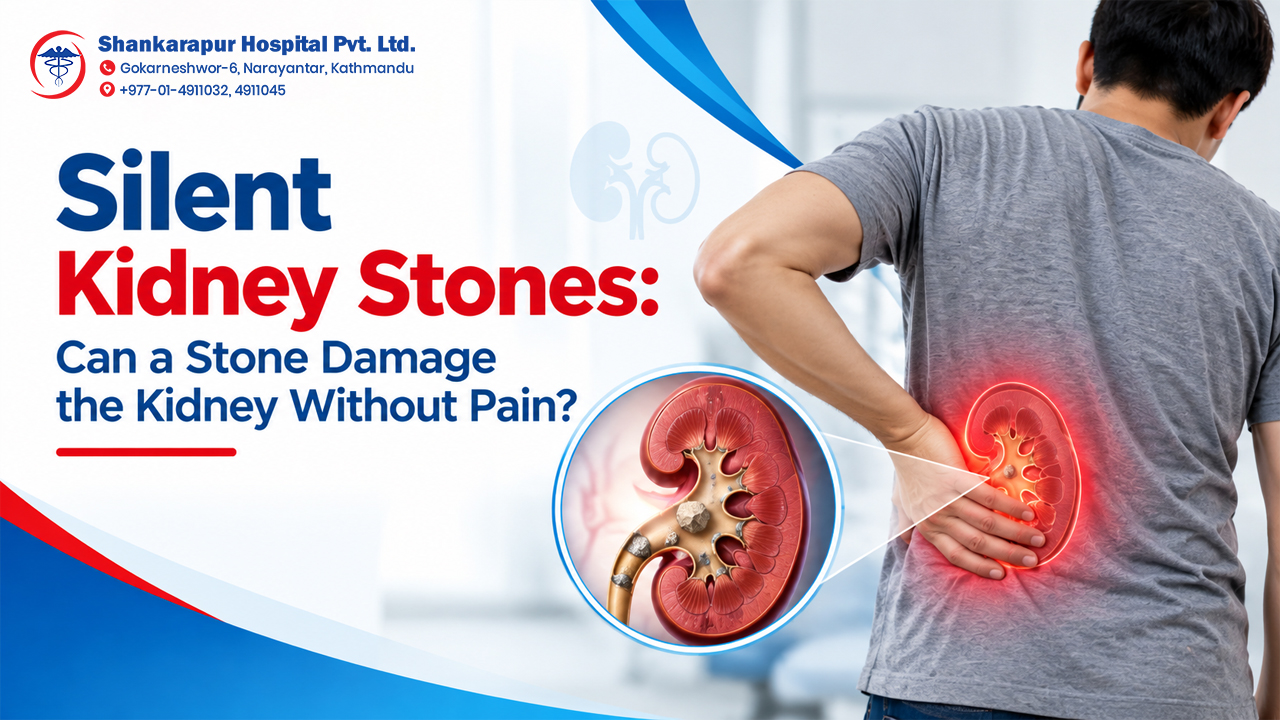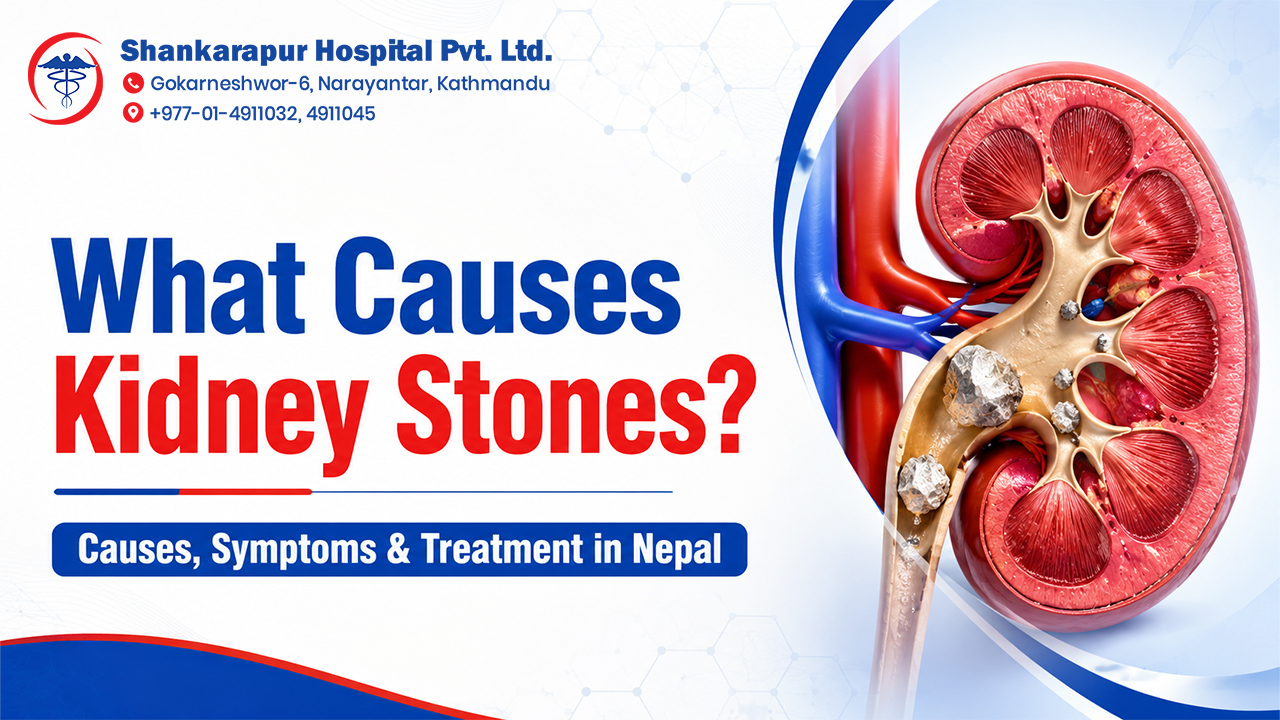
Kidney stones are one of the most common urinary tract problems affecting people of all ages. The pain can begin suddenly and often becomes severe enough to disrupt daily life. Understanding the real causes of kidney stones is important because it helps you prevent future episodes and protect your kidney health in the long run.
Kidney stones, also known as renal calculi, are hard mineral deposits that develop inside the kidneys when urine becomes too concentrated. Over time, minerals and salts stick together and form crystals, eventually turning into stones.
At Shankarapur Hospital, a trusted urology hospital in Nepal, many patients seek treatment for kidney stones every year. Some arrive with unbearable pain, while others discover stones during routine health checkups. In this guide, we’ll explain the common causes of kidney stones, available treatment options in Nepal, and practical ways to reduce your risk naturally.
How Do Kidney Stones Form?
Your kidneys continuously filter waste products and excess fluids from the blood. These wastes leave the body through urine. However, when there is not enough water in the urine, minerals such as calcium, oxalate, and uric acid start to crystallize.
At first, these crystals are tiny. But over time, they attract more minerals and gradually grow into stones. Small stones may pass naturally without causing symptoms, while larger stones can block the urinary tract and trigger intense pain.
Different Types of Kidney Stones
Not all kidney stones are the same. Identifying the type of stone helps doctors determine the underlying cause and recommend the right treatment.
| Stone Type | Main Composition | Common Causes |
|---|---|---|
| Calcium Stones | Calcium oxalate or phosphate | High-oxalate foods, excess sodium, metabolic disorders |
| Uric Acid Stones | Uric acid | High-protein diet, dehydration, gout |
| Struvite Stones | Magnesium ammonium phosphate | Chronic urinary tract infections |
| Cystine Stones | Cystine amino acid | Genetic condition called cystinuria |
Top 7 Common Causes of Kidney Stones
1. Not Drinking Enough Water
Dehydration is one of the leading causes of kidney stones worldwide, especially in warm climates like Nepal. When the body lacks sufficient water, urine becomes concentrated, making it easier for crystals to form.
People who sweat heavily, work outdoors, or simply forget to stay hydrated are at greater risk.
2. High Salt and Sugar Intake
Many everyday foods contain excessive amounts of salt and sugar, including processed snacks, instant foods, and pickles. Too much sodium increases calcium levels in the urine, which contributes to stone formation.
Reducing salty foods can significantly lower the risk of developing stones.
3. Excessive Consumption of Animal Protein
Eating large amounts of red meat, poultry, and seafood can raise uric acid levels in the body. At the same time, it reduces citrate in the urine, a natural substance that helps prevent stones from forming.
A balanced diet with more fruits and vegetables can help maintain healthy urinary chemistry.
4. Obesity and Weight Gain
Studies show that obesity increases the likelihood of kidney stones. Excess body weight changes the chemical balance of urine, creating an environment where stones can develop more easily.
Maintaining a healthy weight through proper diet and physical activity can reduce this risk.
5. Digestive Disorders and Surgery
Conditions such as inflammatory bowel disease (IBD), chronic diarrhea, or gastric bypass surgery can interfere with the body’s ability to absorb water and calcium properly. This imbalance increases stone-forming substances in the urine.
6. Certain Medical Conditions
Some medical conditions directly increase the risk of kidney stones, including:
-
Hyperparathyroidism
-
Renal Tubular Acidosis
-
Recurrent urinary tract infections (UTIs)
-
Cystinuria
Managing these conditions early can help prevent recurring stones.
7. Family History and Genetics
If kidney stones run in your family, your chances of developing them are much higher. Genetics can affect how your body processes minerals like calcium and cystine.
People with a family history of stones should pay extra attention to hydration and dietary habits.
Kidney Stone Treatment Options in Nepal
Treatment depends on the size, location, and type of stone. At Shankarapur Hospital, specialists use advanced techniques to treat kidney stones safely and effectively.
Shock Wave Lithotripsy (SWL)
This non-invasive procedure uses sound waves to break stones into tiny fragments that can pass naturally through urine.
Ureteroscopy (URS/RIRS)
A thin scope is inserted through the urinary tract to locate and remove or laser-break the stone. This method is highly effective for medium-sized stones.
PCNL (Percutaneous Nephrolithotomy)
For larger stones, doctors may perform a minimally invasive surgery through a small incision in the back to remove the stone directly.
Medical Management
Small stones may pass naturally with proper hydration and medications that relax the urinary tract.
Kidney Stone Treatment Cost in Nepal
The cost of treatment varies depending on the procedure and hospital facilities.
| Procedure | Estimated Cost |
|---|---|
| Lithotripsy (SWL) | NPR 20,000 – NPR 40,000 |
| Laser Procedures (RIRS) | NPR 80,000 – NPR 1,50,000 |
| PCNL Surgery | NPR 60,000 – NPR 1,10,000 |
These are approximate prices. A consultation with a urologist is necessary for an accurate estimate.
How to Prevent Kidney Stones Naturally
Preventing kidney stones often comes down to simple lifestyle habits.
Drink Plenty of Water
Aim for 2.5–3 liters of water daily to keep urine diluted.
Reduce Salt Intake
Lowering sodium intake helps decrease calcium buildup in urine.
Limit Excess Animal Protein
Try balancing your meals with fruits, vegetables, and whole grains.
Eat Calcium-Rich Foods
Contrary to popular belief, normal dietary calcium can actually help reduce stone formation by binding oxalates in the digestive tract.
Maintain a Healthy Weight
Regular exercise and balanced nutrition can reduce your overall risk.
Early Signs of Kidney Stones
The most common symptom is sudden, sharp pain in the side or lower back that may spread toward the abdomen or groin. Other symptoms include:
-
Nausea or vomiting
-
Frequent urge to urinate
If you experience these symptoms, medical evaluation is important.
Home Remedies vs Clinical Treatment
| Feature | Home Management | Clinical Treatment |
|---|---|---|
| Suitable For | Small stones (<5mm) | Larger stones (>6mm) |
| Method | Water, lemon juice, pain relief | Lithotripsy, laser, surgery |
| Recovery Time | Several weeks | Usually same day or short stay |
| Success Rate | Moderate | Very high |
Frequently Asked Questions
Does hard water cause kidney stones?
Hard water contains minerals, but experts believe overall water intake matters more than the mineral content itself. Staying hydrated is the key.
Can kidney stones go away on their own?
Small stones often pass naturally. However, larger stones may require medical treatment to avoid complications.
Is kidney stone treatment covered by insurance in Nepal?
Many private insurance companies and government health programs cover major kidney stone procedures in Nepal.
Final Thoughts
Kidney stones can be extremely painful, but many cases are preventable with healthy daily habits and early medical care. Staying hydrated, improving dietary choices, and getting regular checkups can greatly reduce the chances of recurrence.
At Shankarapur Hospital, experienced urology specialists provide advanced diagnosis and minimally invasive treatment options to help patients recover safely and comfortably. If you notice symptoms of kidney stones, seeking timely medical attention can prevent serious complications and protect your long-term kidney health.